


Key Takeaways
- Although daytime actions might reveal a squirrel and nighttime sounds may signify a rat, timing is not enough to identify the species.
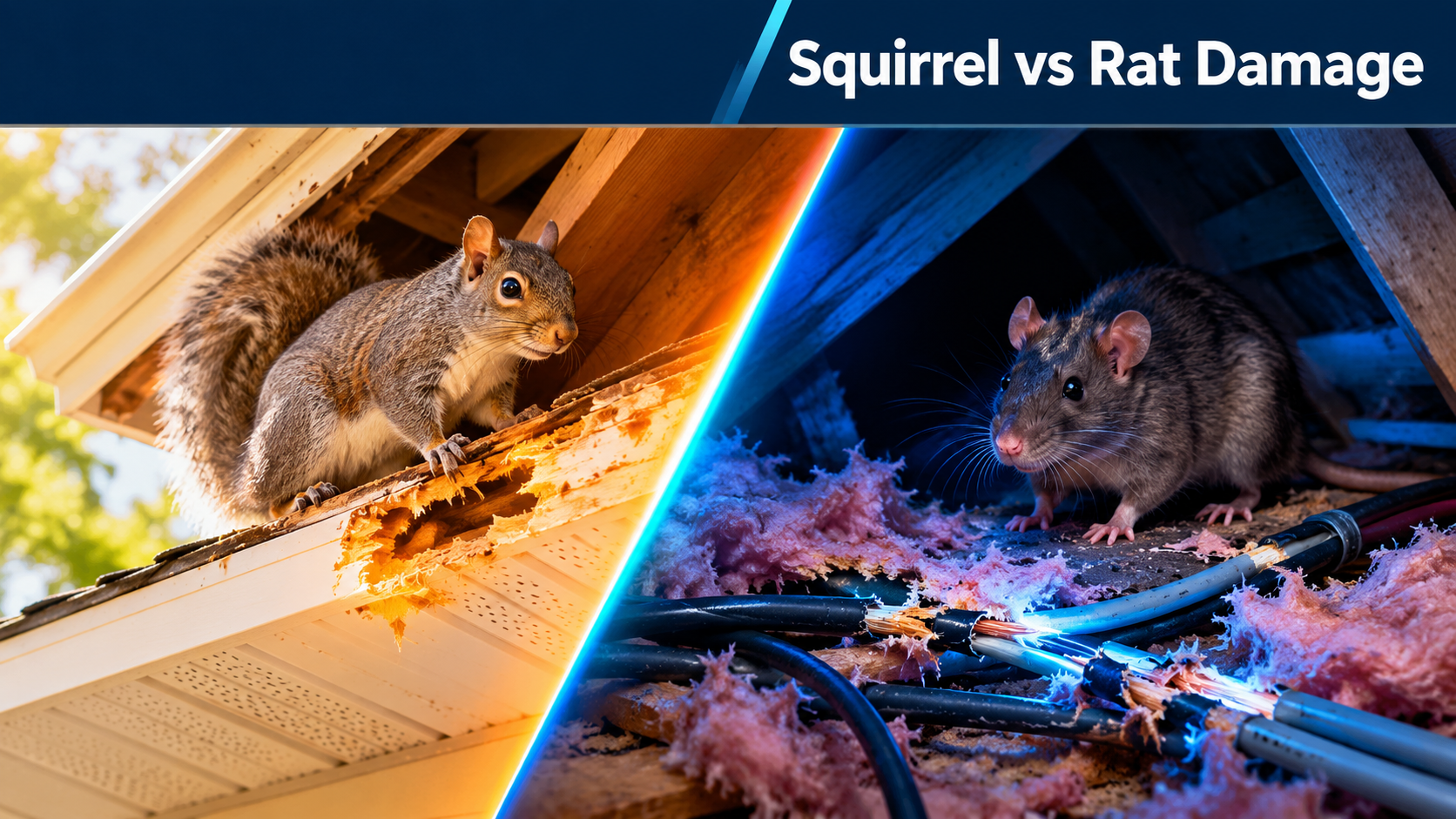
- Squirrels may leave visible signs of chewing at the edges of rooftops and at the soffit, while rats typically destroy insulation, wiring, and hidden areas.
- When viewed in combination, droppings, damage from nesting materials, and entry points are more informative.
- Both animals can create electrical hazards and contaminate attic insulation.
Scratching above the ceiling, disturbed insulation, or unexplained chewing can indicate wildlife in your attic. For Orlando homeowners, identifying the likely culprit is an important first step toward addressing squirrel damage Orlando properties may experience.
Other rodents such as squirrels and rats may pose similar issues, but because they are active at different times, nest in different areas, and cause damage in different locations, these other options can be ruled out. There is no single sign that will indicate which animal is responsible. The best evaluation treats multiple clues as a whole.
Squirrel Damage vs. Rat Damage: Quick Comparison
| Sign | Possible squirrel activity | Possible rat activity |
| Typical activity time | More likely during daylight | More likely after dark |
| Common damage locations | Soffits, fascia, roof edges, and vulnerable exterior openings | Wiring, insulation, rafters, wall cavities, and roof spaces |
| Nesting clues | Leaves, twigs, and gathered insulation | Shredded insulation and other soft nesting material |
| Droppings | Small, elongated pellets that may be difficult to identify visually | Small, dark droppings; shape and size vary by rat species |
| Main limitation | Other wildlife may produce similar damage or sounds | Other rodents and wildlife can leave similar evidence |
These are general indicators, not definitive identification rules. For more detail on roof rat behavior, nesting locations, and damage, consult the University of Florida’s IFAS Extension guidance on roof rats.
1. Check When the Noise Occurs
Eastern gray squirrels are primarily active during the day. Scampering, scratching, or heavier movement in the morning and afternoon may indicate squirrel activity around the roofline or inside an attic.
Roof rats are nocturnal. Gnawing, fast scurrying and light scratching at night can indicate rats traversing the wall cavity or attic.
Record when the noises occur and where they seem strongest. These observations can help narrow the search, but unusual activity times are possible, and other animals can make similar sounds.
2. Look for Damage Around Roof Edges and Concealed Spaces
Vulnerable exterior materials may be chewed by squirrels to make or enlarge an entrance. Look for gnaw marks around fascia board, soffits, roof returns and vent cover damage. Nesting activity is likely to be close if nesting leaves or twigs or disturbed insulation are present.
Rat activity can be harder to spot because roof rats climb and use concealed routes. Damage may appear around electrical wiring, rafters, insulation, and wall cavities without an obvious new opening in the roofline.
Both animals can cause damage to wiring and building materials. The wire insulation is a problem, especially when chewed since exposed conductors pose a fire hazard. Avoid touching damaged wiring, arrange for an assessment with a qualified electrician.
3. Compare Droppings and Nesting Evidence
Context can be added through droppings and nest materials, but it isn’t always possible to visually identify them. The droppings are dark and small and may have different shapes, depending on the species of rats. Squirrel droppings may also be long and narrow.
Nesting material may provide another clue. Squirrels can gather leaves, twigs, and insulation into a nest, while rats may use shredded insulation or other soft materials in sheltered spaces.
Avoid handling droppings or nesting material directly. Do not sweep or vacuum potentially contaminated debris, which can release particles into the air. A professional can assess the affected area and recommend suitable cleanup.
4. Assess the Evidence Together
An inspector would then check that any external damage and any evidence that can be seen inside is in agreement, would search for nesting material or other signs of activity and would find out if the suspected opening leads to the affected area. The first assumption might need to be revised, if the evidence suggests otherwise.
This is so important since the damage that is caused by rats in Orlando houses can be mistaken for squirrels damaging the house. Reliable assessment is better achieved through a structured approach than simply selecting a removal method because of the noise or damage to one surface.
5. Why a Wildlife Inspection Matters
The wildlife inspection Orlando homeowners book will determine the animal, the location of the animal’s entry and the type of damage to address. Can also show if more than one animal or multiple entry points exist.
For rodent damage Orlando properties experience, the assessment should consider concealed travel routes, chewed wiring, and contaminated insulation. With suspected squirrel activity, roofline defects and openings around soffits or vents may deserve closer attention.
Sealing an opening before confirming that the animal has left can trap wildlife inside. Removing an animal without repairing the access point can also leave the home vulnerable to another intrusion.
Protect Your Orlando Attic From Further Damage
Prompt attention can help limit attic animal damage Orlando homeowners discover. Avoid handling wildlife, entering unsafe attic spaces, or sealing suspected openings before the situation has been assessed.
Critter Control of Orlando can assess potential squirrel or rat problem activity and advise the residents on what measures are necessary to eradicate, exclude and repair the infestation. Call Critter Control Orlando to get a professional evaluation and get your home safe from any subsequent invasions.
Find Out What’s Causing Attic Damage in Orlando
Scratching, chewed materials, or damaged insulation can point to squirrels or rats. Contact the Orlando team to discuss an inspection and the next steps for protecting your home.
Frequently Asked Questions
1. How can I tell if I have squirrels or rats in my attic?
Daytime scampering may suggest squirrels, while nighttime scratching may point toward rats. Compare the timing with roofline damage, droppings, and nesting material; arrange an inspection if the signs remain unclear.
2. Can squirrels and rats both damage electrical wiring?
Yes. Both may chew wire insulation, creating potential electrical and fire hazards. Avoid touching damaged wiring and contact a qualified electrician.
3. Is squirrel damage more visible than rat damage?
Squirrels may leave noticeable chewing around soffits and roof edges, while rat damage can remain concealed around wiring, insulation, and wall cavities. These patterns are not definitive.
4. Should I seal an attic opening as soon as I find it?
No. First determine whether an animal remains inside and whether dependent young could be trapped. The appropriate exclusion method depends on the species and circumstances.
5. When should I schedule a wildlife inspection in Orlando?
Make an assessment if there are repeated noises in the attic, droppings, broken insulation, chewed materials or known entry points. Handle any exposed wiring or other hazards immediately.
