


Key Takeaways
- Wildlife can enter an Orlando home through relatively small openings around the roof, attic, soffits, vents, and other exterior areas.
- Scratching sounds, disturbed insulation, droppings, nesting material, or repeated animal activity can indicate a wildlife entry problem.
- A wildlife inspection helps identify how an animal entered and whether other vulnerable areas need attention.
- Removing the animal without addressing the access point can leave the home vulnerable to another intrusion.
- Wildlife exclusion focuses on reducing opportunities for animals to re-enter after removal.
An animal in the attic rarely appears there without a way in.
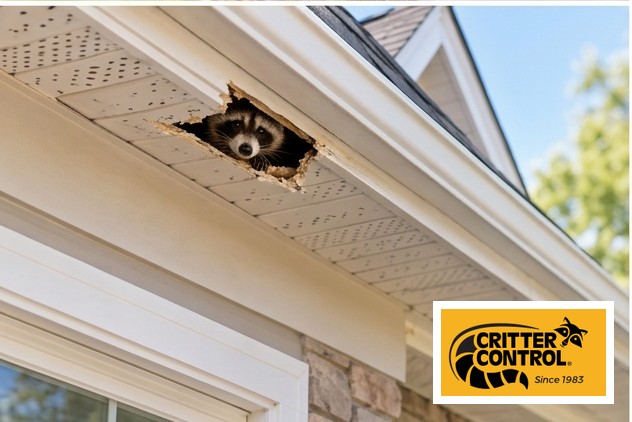
For Orlando homeowners, that access point may be around a roof edge, soffit, vent, fascia, or another opening that is easy to overlook from ground level. The warm Florida climate and established residential neighborhoods can create plenty of opportunities for wildlife to find shelter in attics and other parts of a home.
The important question is not simply, “What animal got inside?”
It is also: How did it get in, and what needs to happen after it is removed?
Where Do Wildlife Entry Points Commonly Occur?
Wildlife does not need a dramatic opening to access an attic. The exact entry point depends on the property and the animal involved.
Homeowners may want to look for signs around:
- Roof edges and soffits
- Attic vents
- Fascia and exterior openings
- Gaps around areas where building components meet
- Damaged or loose exterior materials
- Openings around utility or other penetrations
Some access points may be difficult to identify from the ground. Others may only become apparent after an inspection finds signs of animal activity inside the attic.
That is why seeing an animal near the roof does not necessarily tell you where it entered.
What Signs Suggest an Animal Has Entered the Attic?
Sometimes the first indication is noise.
Scratching, movement, or other activity overhead can prompt a homeowner to investigate. Other warning signs may include displaced insulation, droppings, nesting material, unusual odors, or visible damage around an exterior opening.
The signs can also help determine whether the issue is active or may have occurred previously.
For example, Florida Fish and Wildlife Conservation Commission guidance notes that signs such as droppings and staining around entrances can help identify bat activity in buildings.
Step 1: Get a Wildlife Inspection in Orlando
Wildlife inspection in Orlando is much more than just staring at the first opening a homeowner spots.
The inspection can focus on signs of activity, accessible areas, likely entry points, and wildlife-related damage. The objective is to understand how the animal accessed the property and what conditions may need attention after removal.
This is particularly useful when there are multiple possible openings.
A homeowner may notice a damaged soffit, for example, while the actual access route is somewhere else along the roofline. Identifying the relevant entry point helps determine what exclusion work may be appropriate.
Step 2: Remove the Wildlife Safely
Once the situation has been assessed, the next step is appropriate wildlife removal.
The method depends on the animal and circumstances of the property. Homeowners should avoid trying to corner, grab, or handle wildlife themselves, particularly when the animal is inside a confined attic space.
Florida also has specific requirements governing nuisance wildlife and protected species, so removal should be handled in accordance with applicable regulations.
For bats, the rules are particularly important. FWC states that bat exclusion has seasonal restrictions in Florida, including a maternity period when exclusion devices cannot be used without the required authorization.
Step 3: Address Animal Entry Points in Orlando
Removing an animal addresses the immediate problem. Wildlife exclusion in Orlando refers to addressing the entrance that made it happen.
After you get rid of the animal, you can inspect the entrance and take action accordingly. This can be all parts of the house including roof edges, soffits, vents, etc.
The goal is not to seal random openings simply because they are visible.
The inspection should help determine which access points matter and what approach is appropriate.
If another type of repair is needed—such as roofing, electrical, HVAC, or structural work—the homeowner may need an appropriately qualified contractor for that portion of the job.
Step 4: Check for Wildlife-Related Damage
The entrance of an animal is just one component of the issue.
After taking care of the wildlife, there may be some evidence of animal activity remaining in the attic, such as some insulation that has been disturbed, nests, droppings, etc. It is important to check the condition of the area before concluding that the problem has been resolved.
This is where attic wildlife in Orlando becomes a broader property concern. The question shifts from “Is the animal gone?” to “What condition did it leave the attic in?”
Depending on the findings, cleanup, sanitization, or wildlife-related restoration may be appropriate within the scope of services.
Why Fixing the Entry Point Matters
Imagine that a squirrel has been removed from a house but the hole the squirrel used to get in still remains open.
The scratching comes to an end. The homeowner is now satisfied. But after several weeks, another animal may notice the chance.
That is why removal and exclusion must be taken together as two connected stages of the process.
Addressing identified access points can help reduce the risk of re-entry and form part of a longer-term approach to wildlife protection.
When Should Orlando Homeowners Call for an Inspection?
An inspection can make sense when there are unexplained attic noises, visible openings, repeated wildlife activity around the roof, disturbed insulation, droppings, or signs that an animal has entered the home.
It is also worth investigating when a homeowner finds an opening but cannot determine whether it is actually being used.
The earlier the access route and wildlife-related damage are understood, the easier it can be to determine what should happen next.
Get Help With Wildlife Entry Points in Orlando
Wildlife entry problems are rarely solved by focusing on the animal alone.
A practical response starts by identifying the problem, inspecting the property, removing wildlife appropriately, addressing relevant entry points, and assessing any cleanup or restoration needs. From there, homeowners can consider measures that reduce the likelihood of another intrusion.
Critter Control can help Orlando homeowners assess wildlife-related concerns and determine the appropriate next steps based on what an inspection reveals.
FAQs
What are common wildlife entry points in Orlando homes?
Common areas can include roof edges, soffits, attic vents, fascia, and other exterior openings. The relevant access point varies by property and should be identified through an inspection rather than assumed.
How can I tell if an animal has entered my attic?
Scratching or movement sounds, disturbed insulation, droppings, nesting material, unusual odors, and visible exterior openings can indicate wildlife activity. An inspection can help determine whether the signs point to an active entry problem.
What is wildlife exclusion?
Wildlife exclusion focuses on addressing identified access points so animals have fewer opportunities to enter a structure again. The specific work depends on the inspection findings and the animal involved.
Should I seal an attic opening myself?
It is better to identify whether an animal is actively using the opening before sealing it. Some wildlife, including bats in Florida, are subject to specific exclusion requirements, so homeowners should understand the situation before closing an access point.
What happens after wildlife is removed from an attic?
The next steps can include evaluating entry points, wildlife-related damage, contaminated areas, insulation, and other attic conditions. Depending on the findings, exclusion, cleanup, sanitization, or restoration may be appropriate.
